
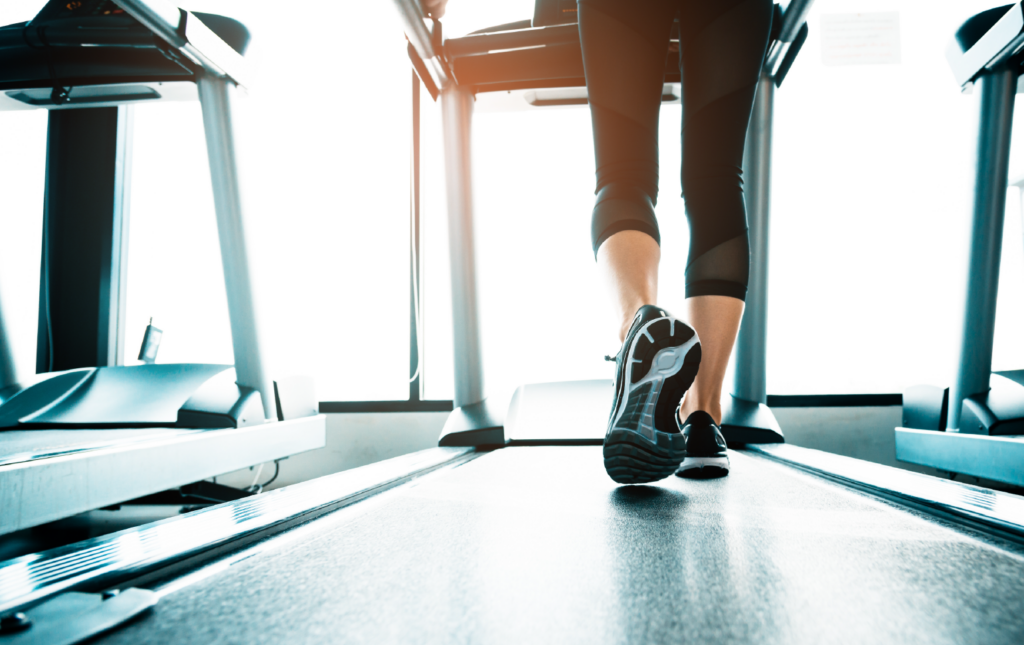
If your workout walking, you may be doing more for your health than you think.
Walking is one of the simplest ways to get moving, and yes, walking absolutely counts as exercise. A brisk walk can increase your heart rate, improve cardiovascular fitness, build endurance, and help you add more physical activity to your day.
It is also approachable. You don’t need to know how to use complicated equipment or follow an advanced workout. You can simply start walking.
Whether you’re brand new to exercise, getting back into a routine, or looking for a lower-impact cardio day, walking can have a place in your fitness routine.
Here are six reasons to lace up your shoes and get moving.
1. Walking Is Good Cardio
You don’t have to run to get a cardiovascular workout.
Brisk walking is a moderate-intensity aerobic activity that can help strengthen your heart and improve cardiovascular fitness.
The American Heart Association recommends adults get at least 150 minutes of moderate-intensity aerobic activity each week. A brisk walk can help you work toward that goal.
And you don’t have to do it all at once.
A 30-minute walk five days a week is one option, but shorter walks throughout the day can add up too.
2. Walking Can Support Your Weight Loss Goals
Can walking help you lose weight?
It can be part of the equation.
Walking increases your daily physical activity and burns calories. When combined with nutrition, strength training, and other healthy habits, regular walking can support weight management.
The intensity of your walk matters too. Walking faster, increasing your distance, or adding an incline can increase the challenge and energy demands of your workout.
If weight loss is your goal, don’t feel like every workout has to leave you completely exhausted to count.
Consistency matters.
3. Walking Can Help Improve Your Mood
A walk isn’t only good for your body.
Physical activity can also provide mental health benefits. Regular exercise is associated with reduced anxiety, better sleep, and a lower risk of depression.
That makes a walk a great option on days when you need to move but don’t necessarily feel up for an intense workout.
Put on your headphones, choose your pace, and give yourself some time to move.
Sometimes a simple walk can be exactly what you need after a long day.
4. Walking Is Beginner-Friendly
Walking is one of the easiest exercises to scale to your current fitness level.
If you’re new to the gym, you can start with 10 or 15 minutes at a comfortable pace and build from there.
As your endurance improves, you can gradually increase:
- Your walking time
- Your speed
- Your distance
- Your treadmill incline
- The number of walks you take each week
You don’t need to go from zero to an hour-long workout.
Start where you are and build gradually.
5. Walking Is Lower Impact
Running isn’t for everyone, and that’s okay.
Walking provides a way to get your heart rate up without the repeated impact associated with running. Brisk walking is generally considered safe for most people and can be an approachable way to increase physical activity.
That can make it particularly useful for beginners or anyone looking for a lower-impact cardio option.
If you have an injury, medical condition, or concerns about starting a new exercise routine, talk with your healthcare provider about the activities that are appropriate for you.
6. Walking Can Help You Build a Fitness Routine
One of the biggest benefits of walking is how easy it is to incorporate into your routine.
You can walk for 15 minutes before work. Take a longer walk on your lunch break. Hop on the treadmill after strength training. Or make walking your entire workout on a lighter day.
Those minutes add up.
If you’re struggling to become more consistent with exercise, walking can also make going to the gym feel less intimidating. You don’t have to walk through the door knowing how to do an entire strength routine.
Start with something familiar.
Get on the treadmill and walk.
You can build from there.
How Long Should You Walk for Exercise?
There isn’t one perfect walking workout for everyone.
If you’re a beginner, start with an amount that feels manageable. That could be 10, 15, or 20 minutes.
As you become more comfortable, you can work toward longer walks or increase your pace.
For general health, adults should aim for at least 150 minutes of moderate-intensity aerobic activity each week, along with muscle-strengthening activity at least two days per week.
The important part is remembering that those minutes can be spread throughout your week.
You don’t need to complete one huge workout for walking to count.
How to Make Walking a Better Workout
Once a normal walk starts feeling easy, you have several ways to make it more challenging.
Increase Your Speed
Try gradually increasing your pace until you’re walking briskly.
A simple way to judge your intensity is the talk test. During moderate-intensity exercise, you should generally be able to talk but not sing comfortably.
Add an Incline
If you’re walking on a treadmill, increasing the incline can make the same walking pace more challenging.
Start small and gradually increase the incline as your fitness improves.
Try Walking Intervals
Instead of maintaining one pace for your entire workout, alternate between easier and faster periods.
For example:
2 minutes: comfortable pace
1 minute: brisk pace
2 minutes: comfortable pace
1 minute: brisk pace
Continue alternating for 20 to 30 minutes.
As your endurance improves, you can increase the length or intensity of the faster intervals.
Walk Before or After Strength Training
Walking doesn’t have to be your entire workout.
A short treadmill walk can be an easy way to warm up before strength training or add some cardio after lifting.
Combining cardio and strength training can help you create a more balanced fitness routine.
Is Walking Every Day Enough Exercise?
Walking every day can be a great habit, but a well-rounded fitness routine includes more than cardio.
Adults are also encouraged to perform muscle-strengthening activities at least two days per week.
That could mean combining your walks with exercises using:
- Dumbbells
- Resistance machines
- Kettlebells
- Barbells
- Bodyweight movements
You don’t have to choose between walking and strength training.
They can work together.
Take Your Walk Indoors at Nick’s Fitness Club
West Texas weather doesn’t always cooperate with your workout plans. When it’s too hot, too cold, too windy, or you simply prefer exercising indoors, the treadmill is waiting.
Nick’s Fitness Club in Lubbock offers treadmills along with ellipticals, bikes, rowers, strength equipment, free weights, turf space, fitness classes, and personal training.
So whether today’s workout is a brisk 30-minute walk or the beginning of a full strength and cardio session, you have plenty of room to make it your own.
Walking counts.
And sometimes the best workout is simply the one that gets you moving.
Ready to get your steps in? Visit Nick’s Fitness Club in Lubbock and start moving today.